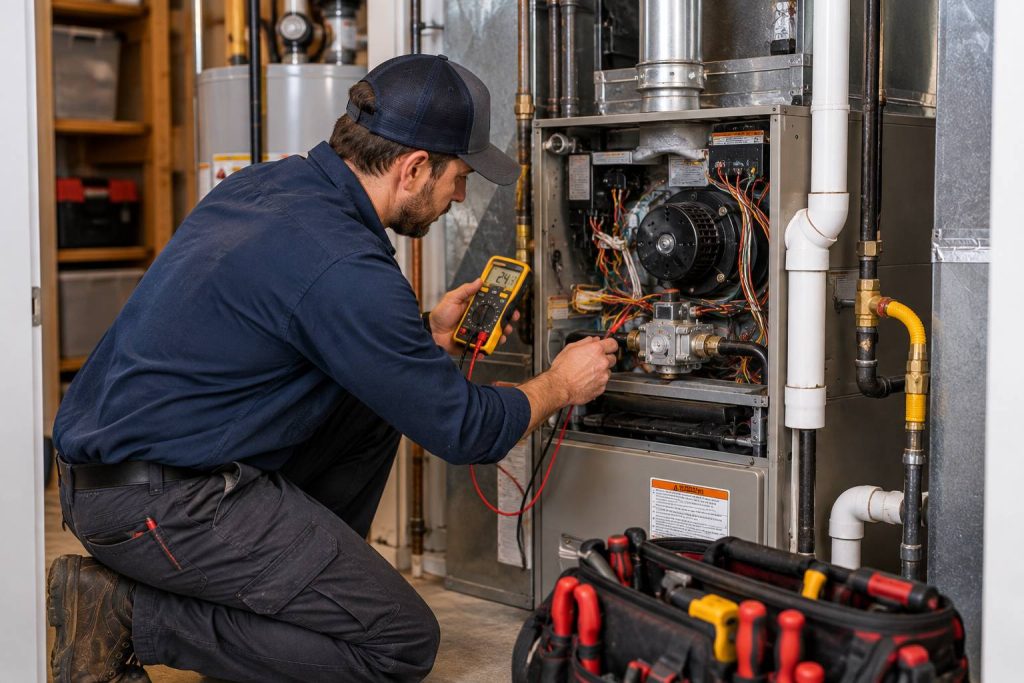
The second week of November is when our phones start picking up a specific rhythm. Not the dramatic January emergency calls yet. The quieter ones, where the furnace is still running but something’s off, and the homeowner can’t quite name what. A customer off 55th Street called us one morning last November and said her furnace was “working but weird.” It would come on, run for about three minutes, and then shut off, then come on again fifteen minutes later. She’d lived with it for a week before calling. That’s a classic early-winter pattern, and it’s one of about a half-dozen common furnace problems during early winter that show up on our call list once sustained cold-weather runtime starts exposing issues that didn’t surface during light October use.
Short Cycling That Starts Happening Once Runtime Climbs
Short cycling is the single most common early-winter furnace problem we see. The furnace fires up, runs for a few minutes, shuts off, and then starts the cycle again. The home never really gets warm, the furnace works harder than it should, and components wear faster than they would under normal operation.
The specific causes we trace short cycling to:
- Dirty flame sensor which prevents the furnace from maintaining flame recognition, triggering safety shutoff
- Clogged air filter that restricts airflow enough to trigger the high-limit switch
- Oversized furnace that heats the space quickly and shuts off before completing a proper cycle
- Thermostat problems including bad placement near a heat source or sensor failure
- Blocked flue or restricted venting producing safety shutoffs
- Failing pressure switch that intermittently loses signal
- Cracked heat exchanger triggering safety shutoff on some units
The 55th Street customer’s problem turned out to be the first one on that list. A dirty flame sensor is one of the cheapest and most common early-winter failures. We cleaned it, verified operation across several cycles, and her furnace has been running normally since. The whole visit cost less than a nice dinner out. Had she waited another two weeks until it stopped firing entirely, the emergency call would have run several times that.
For Shawnee homes where the furnace has been sitting idle through summer, the flame sensor often accumulates enough film during the off-season that it struggles to maintain recognition during the first weeks of sustained runtime. This is why professional furnace maintenance catches so many problems before they surface. Flame sensor cleaning is a standard part of fall service.
The Pilot Light and Ignition Issues That Surface First
For furnaces with electronic ignition (which is most residential units installed in the last 20 years), ignition problems are among the first failures to show in early winter.
The specific ignition issues we see:
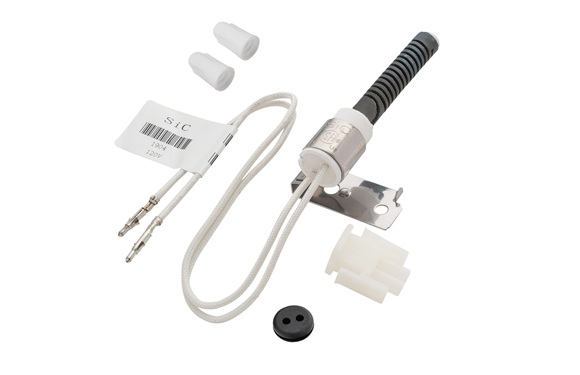
- Hot surface igniter failure where the igniter cracks or burns out, often fatigued by thermal cycling
- Spark igniter problems on units using spark ignition, including fouled electrodes or weak spark
- Pilot light issues on older standing-pilot units including blocked pilot orifice, drafty pilot location, or thermocouple failure
- Draft inducer failures that prevent the ignition sequence from completing
- Gas valve problems including stuck valves or inconsistent gas supply
- Control board failures affecting the ignition sequence timing
For older Shawnee homes in the Nieman Road corridor or similar established neighborhoods, the ignition system is often one of the first components to show its age. Hot surface igniters typically last 3 to 7 years in regular use. The ones that made it through last winter are the ones most at risk this winter.
For a customer off Pflumm Road last November, her ignition system went out on the first Sunday it dropped below 25 degrees overnight. The igniter had been accumulating thermal fatigue for about a year, and the cold snap pushed it past its breaking point. A $180 igniter replacement during fall service would have prevented a Sunday emergency call that ran several hundred dollars.
The Strange Smells That Show Up in November
The first few runs of a furnace in early winter commonly produce specific smells, and homeowners understandably want to know whether what they’re smelling is normal or something to worry about.
The specific smells and what they mean:
- Dusty burning smell on first fire-up of the season, which is usually just dust burning off the heat exchanger and is harmless, resolving within a few runtime hours
- Persistent dusty smell that continues beyond the first few runs, which may indicate an unusually dirty system or ductwork needing attention
- Burning plastic or electrical smell which is never normal and warrants immediate shutdown and professional diagnosis
- Rotten egg or sulfur smell which indicates a gas leak and requires immediate action including evacuation and utility company contact
- Oily or chemical smell which may indicate motor bearing problems or electrical component failure
- Musty or moldy smell which often indicates moisture issues in ductwork or the system itself
- Smoky smell which can indicate combustion problems and warrants prompt professional attention
For the customer off Quivira Road last November who called us about a “sock drawer” smell, the diagnosis was the first-fire-of-season dust burnoff. We talked her through what to expect, had her open windows briefly, and the smell cleared within a couple of hours. Had the smell persisted or carried any of the warning characteristics, we’d have been on-site within the day.
For Shawnee homeowners experiencing unusual furnace smells, the rule we give is simple. Dust smell on first fire-up, fine. Anything else, call before continuing to run the system.
Uneven Heating That Finally Becomes Impossible to Ignore
Uneven heating is often present all winter but becomes impossible to ignore once sustained cold weather hits. The back bedroom that was “a little chilly” in October becomes genuinely cold in early December.
The specific causes we trace uneven heating to:
- Dirty air filter restricting overall airflow to the furthest registers
- Blocked return air vents including furniture or decor obstructing returns
- Closed or partially closed supply registers reducing airflow to specific rooms
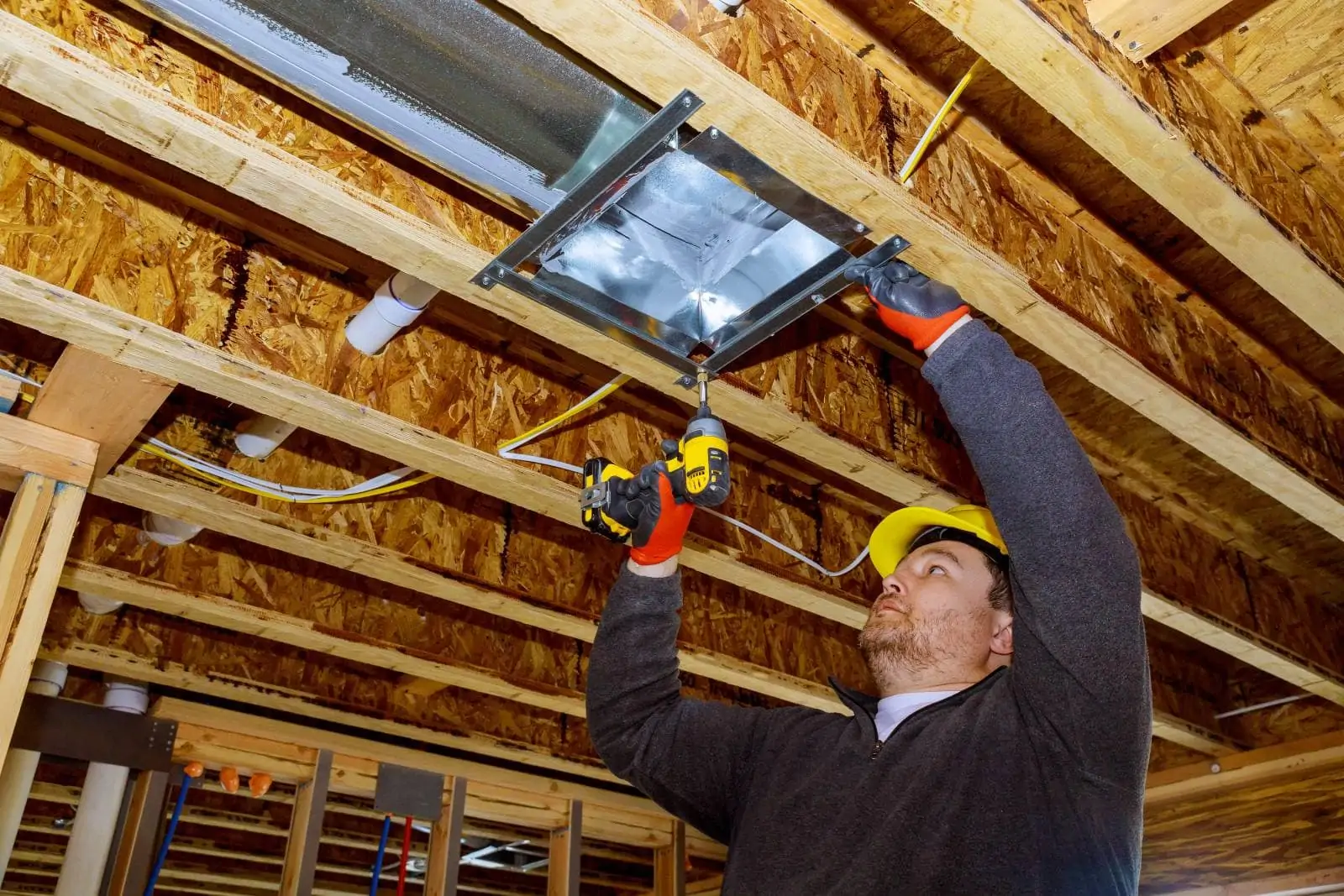
- Ductwork issues including disconnected sections, damage, or inadequate insulation
- Static pressure problems across the system reducing airflow to far rooms
- Zone control failures on systems with zoning
- Oversized or undersized ductwork that was never properly matched to the home
- Thermostat location issues where the thermostat reads differently than the problem area
For Shawnee homes with original 1980s or 1990s ductwork, uneven heating is often a ductwork problem rather than a furnace problem. The furnace may be working perfectly but the distribution system can’t deliver the heated air appropriately.
For a customer in the Shawnee Mission Park area last December, we traced severe uneven heating to a disconnected duct in the attic that had been producing a problem for years. The homeowner had assumed the back of the house was just “always cold.” Reconnecting and resealing the duct restored even heating throughout the home. A problem she’d lived with for years turned out to be a one-visit fix.
The Thermostat Issues That Look Like Furnace Problems
A meaningful portion of what homeowners call “furnace problems” during early winter turn out to be thermostat issues. The thermostat is the brain of the system, and when it’s not working correctly, everything downstream of it behaves oddly.
The specific thermostat issues we see:
- Dead batteries on battery-powered thermostats that depleted during summer idle periods
- Loose wire connections at the thermostat itself, which produce intermittent operation
- Thermostat location problems including sun exposure, drafts, or proximity to heat sources that give false readings
- Programming errors where fall-back from summer cooling schedules confused the system
- Smart thermostat software issues including failed updates or connectivity problems
- Dirty or aged sensors no longer reading accurately
- Thermostat compatibility issues with the specific furnace, particularly after any system work
For a customer off Johnson Drive last early winter, we got a call about the furnace not maintaining temperature. On arrival, we found the furnace running perfectly. The thermostat had been bumped against the kitchen wall during a cabinet installation and had come partially loose from its mounting plate. The connection issue was intermittent, which produced the symptoms the homeowner was experiencing. Ten minutes of work fixed it.
For Shawnee homeowners experiencing what seem like furnace problems during early winter, having the thermostat checked as part of the diagnosis saves time and money. Not every “furnace problem” is actually a furnace problem.
The Carbon Monoxide Concerns That Early Winter Produces
The final cluster of common early winter furnace problems involves carbon monoxide, which deserves specific attention because the consequences of ignoring it are serious.
The specific CO concerns:
- Cracked heat exchangers that have been developing throughout the furnace’s life and show their failure once sustained runtime starts
- Blocked or compromised venting that prevents proper combustion gas evacuation
- Backdrafting from drafty flues, inadequate combustion air, or atmospheric conditions
- Blocked chimneys on older furnaces using the chimney for venting
- CO alarm failures where detectors have reached end of life
- Poor combustion from various causes producing elevated CO output
Every Shawnee home should have working CO detectors on every level, tested every fall. The detectors themselves have a service life (typically 7 to 10 years) and need replacement, not just battery changes.
For furnace repair situations involving any suspected CO issue, our response is immediate. We shut the system down, verify safety, diagnose the cause, and don’t restore operation until the problem is resolved. CO issues aren’t ones we troubleshoot gradually.
What Early Winter Furnace Problems Actually Have in Common
The common furnace problems during early winter mostly share one characteristic: they didn’t start in November. They started earlier, developed through the shoulder season, and became impossible to ignore once sustained cold weather pushed the system into real runtime. Shawnee homeowners who schedule professional service in September and October consistently see winters where these problems don’t materialize because the issues were caught and resolved before cold weather exposed them. The 55th Street customer’s short cycling, the Pflumm Road customer’s igniter failure, the Shawnee Mission Park ductwork problem, the Johnson Drive thermostat issue, all of them were conditions that proper fall service would have caught. For homes that didn’t get that service done, the early winter window from mid-November through December is when the problems surface, and prompt response during that window produces much better outcomes than waiting until the January emergency.
Get Early Winter Furnace Problems Diagnosed at Your Shawnee Home
The team at Air Care is ready to help. Contact us today to schedule prompt furnace diagnosis at your Shawnee, KS home when early winter conditions reveal problems that light fall runtime didn’t expose.
