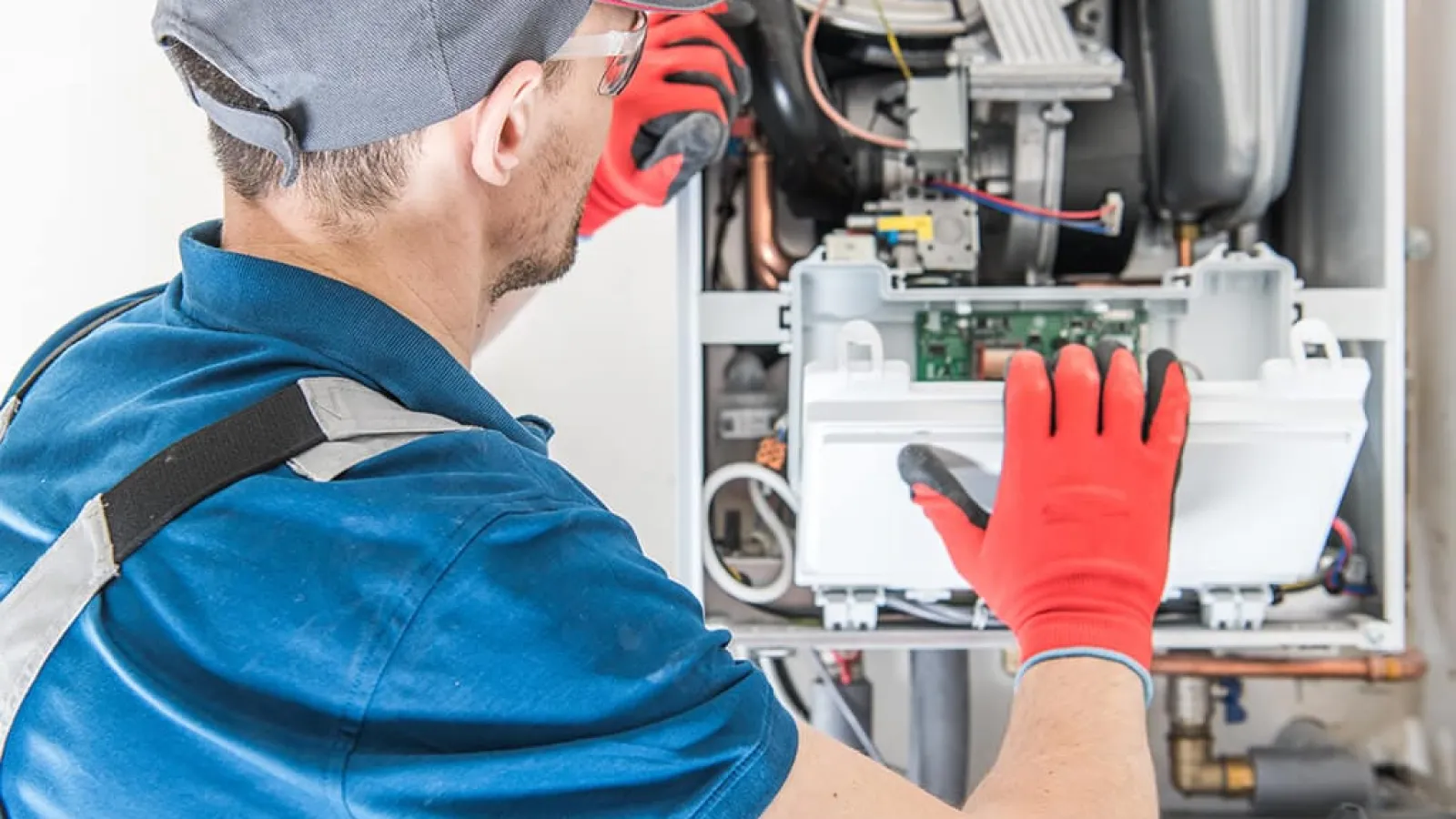
A homeowner off Johnson Drive asked us last October what we were actually going to do during his pre-winter service appointment. He’d scheduled it because his neighbor had recommended us, but he admitted he had no idea what the visit involved beyond “the guy comes and checks the furnace.” That’s a reasonable question most homeowners never ask because they figure the technician will handle whatever needs handling. Preparing your furnace for winter the professional way involves a specific sequence of checks, cleanings, measurements, and adjustments, and understanding what should actually happen during the visit helps you recognize whether your service is thorough or whether someone is just going through the motions. Here’s what a real pre-winter furnace service looks like at a Shawnee home.
What the Visit Looks Like in the First Fifteen Minutes
Before any screwdriver comes out, the first part of a legitimate pre-winter service visit involves conversation and observation. Technicians who skip this part miss things that matter.
The specific first-fifteen-minutes activities:
- Walkthrough conversation with the homeowner about any issues from last winter, strange noises, cold rooms, cycling patterns, thermostat quirks, or anything else noticed
- Visual check of the thermostat verifying type, battery condition if applicable, programming, and apparent function
- Walk to the furnace location observing the condition of the surrounding space, any debris, any clearance issues
- Visual exterior inspection of the furnace unit itself including signs of rust, soot, water staining, or obvious damage
- Check of nearby combustion air sources and venting
- Thermostat test verifying the furnace responds when called for heat
This conversation and observation phase matters because it directs the rest of the visit. A homeowner who mentions “the back bedroom was always a few degrees cooler” gives the technician specific information to investigate. A technician who skips this step misses the context that would have pointed them to the actual problem.
For the Johnson Drive homeowner, this walkthrough revealed that his furnace had been cycling on and off every few minutes during the coldest nights last winter. He hadn’t thought it was worth mentioning until we asked specifically. That short-cycling turned out to be the key symptom of a problem we eventually traced to a dirty flame sensor.
The Combustion Inspection That’s the Core of the Visit
The combustion inspection is where the real work happens. This is the portion of pre-winter service that determines whether your furnace will run safely through the heating season.
The specific combustion inspection activities:
- Power off and lockout at the furnace disconnect for safety
- Burner compartment access including removing panels for direct inspection
- Burner inspection and cleaning removing accumulated dust, debris, and any corrosion from burner tubes
- Flame sensor inspection and cleaning since this is one of the most common failure points, resolved by careful cleaning
- Igniter inspection checking for cracks, carbon buildup, or signs of imminent failure
- Heat exchanger inspection using a camera scope to look for cracks, holes, or deterioration that would allow combustion gas migration
- Gas pressure measurement verifying the manifold pressure matches manufacturer specifications
- Combustion analysis when applicable, measuring CO levels, O2, flue temperature, and efficiency
- Venting inspection for the flue pipe and any draft components
- Condensate drain inspection on high-efficiency units for blockage or damage
The furnace maintenance work that happens during this phase is what separates professional service from a visual walkthrough. The combustion analysis specifically catches problems that no visual inspection would reveal. A furnace that looks fine, sounds fine, and heats fine can be running at combustion parameters that produce excess carbon monoxide, waste significant fuel, or indicate developing problems.
For older Shawnee homes with furnaces 10+ years old, the heat exchanger scope is particularly important. The Nieman Road corridor has substantial housing stock from the 1980s and 90s where original furnaces or their first replacements are now reaching the age where cracks appear.
The Mechanical and Electrical Checks
With the combustion side verified, the service moves to mechanical and electrical components. These are where developing problems often hide.
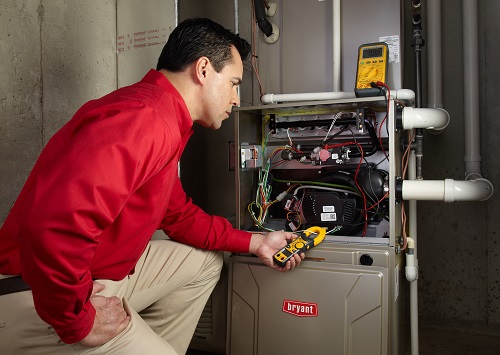
The specific mechanical and electrical activities:
- Blower motor inspection including bearings, mounting, amp draw under load, and any signs of wear
- Blower wheel inspection checking for debris buildup, imbalance, or damage
- Belt inspection on belt-drive units for wear, tension, and alignment
- Capacitor testing on units with capacitors, since these fail predictably and cheaply
- Contactor inspection for pitting, carbon buildup, or signs of failure
- Wire connection check at the control board, blower, and other connection points for tightness and corrosion
- Control board inspection for signs of damage, burn marks, or component failure
- Safety switch verification for door switches, limit switches, and roll-out switches
- Pressure switch verification on induced-draft units
- Static pressure measurement across the system to identify restrictive filters or ductwork issues
For Shawnee homes where the furnace is in a basement utility room with other equipment nearby, the clearance and air supply verification during this phase catches conditions that affect long-term reliability. A furnace with inadequate combustion air works harder, cycles differently, and accumulates problems faster than one with proper installation conditions.
The capacitor check during this phase is one of those small items that saves significant money. A capacitor that tests out of specification costs about $35 to replace during a maintenance visit. The same capacitor failing in January during a cold snap costs significantly more as an emergency service call, and the failure can take other components with it.
The Airflow and Filter Verification
Airflow matters as much as combustion for furnace performance. The pre-winter service includes specific airflow verification that many homeowners don’t realize should be part of the visit.
The specific airflow activities:
- Filter inspection and replacement when needed, with the right size and MERV rating for the specific system
- Return air inspection verifying adequate return airflow at the system
- Supply register inspection at a representative sample of registers for proper flow
- Static pressure measurement across the filter and across the system as a whole
- Duct inspection for any visible damage, disconnections, or airflow restrictions in accessible areas
- Register balance verification confirming the system distributes air appropriately across the home
- Humidifier inspection on systems with whole-home humidifiers, which are commonly affected by sitting idle through summer
For Shawnee homes where the back bedroom runs cooler than the rest of the house, this phase is where the problem usually gets identified. Static pressure that’s too high indicates restricted airflow somewhere in the system, often fixable by filter upgrade, register adjustment, or duct repair. Catching this during pre-winter service produces comfort improvements for the entire heating season.
For preventative maintenance that actually produces results, this airflow verification piece is critical. Furnaces starved for airflow run hot, waste fuel, cycle inefficiently, and wear out faster than furnaces with proper airflow. The fix is often simple once the problem is identified.

The Documentation and Handoff That Actually Matters
The last part of a legitimate pre-winter service visit involves documentation and homeowner handoff. This is the piece that distinguishes a professional operation from a quick walk-through.
The specific closing activities:
- Written report of findings, measurements, and any recommended work
- Measurements documentation for combustion analysis, gas pressure, static pressure, and amp draws
- Photo documentation of significant findings when applicable
- Explanation of any issues identified in terms the homeowner can understand
- Recommendations for near-term repairs versus items that can wait
- Filter sizing information and recommendations for the next replacement interval
- Thermostat settings guidance for the winter season
- Emergency contact information for after-hours needs during the heating season
For the Johnson Drive homeowner, our handoff included explaining the flame sensor cleaning we’d done, documenting that his heat exchanger scope had shown no issues, flagging that his capacitor was testing at the low end of acceptable and would likely need replacement within the next year or two, and recommending he upgrade from the one-inch pleated filter he was using to a thicker media filter that would reduce his static pressure. All of that documentation went into his file so the next technician visiting had full context.
That’s genuinely preparing your furnace for winter. Not a quick visual check and a thumbs-up. A systematic verification of combustion safety, mechanical and electrical condition, and airflow performance, documented for both the homeowner and the service record.
What Thorough Pre-Winter Service Actually Produces
Preparing your furnace for winter the professional way takes about 60 to 90 minutes depending on system complexity and runs through combustion inspection, mechanical and electrical verification, airflow measurement, and documented handoff. Shawnee homeowners who get this complete scope done each fall consistently see winters where the furnace just runs, where the January emergency calls happen to other people, and where their system lasts years longer than their neighbors’ furnaces that got cheaper or faster service. The Johnson Drive homeowner’s furnace made it through last winter without a single issue because the September service identified and addressed the specific problems that would have caused midwinter failures. That’s the real argument for professional pre-winter service, and it’s why the question of what actually happens during the visit matters more than most homeowners realize until they’re the ones calling at 11 p.m. on a Tuesday in January.
Get Thorough Pre-Winter Furnace Service for Your Shawnee Home
The team at Air Care is ready to help. Contact us today to schedule professional pre-winter furnace service at your Shawnee, KS home with the systematic combustion inspection, mechanical verification, and documented handoff that actually prepares your system for the heating season.
